Eastcote House Gardens removals guide for fragile items
If you are moving delicate belongings around Eastcote House Gardens, the details matter more than most people expect. A chipped glass, a cracked frame, a smashed lamp base, and suddenly the whole day feels heavier than it should. This Eastcote House Gardens removals guide for fragile items is here to make the process calmer, safer, and far more manageable.
Whether you are moving a few treasured ornaments, a full set of kitchen glassware, or awkward items like mirrors and artwork, good preparation changes everything. The goal is not just to "wrap things up" and hope for the best. It is to move fragile items in a way that protects them from vibration, pressure, moisture, and that one unfortunate bump against a doorframe. We have all seen how quickly a small mistake can become a costly one. Let's avoid that.
Below, you will find practical packing steps, handling advice, local moving considerations, and a few honest trade-offs to think about before moving day. If you want broader support too, you may find the removal services in Eastcote page useful alongside this guide.
Why Eastcote House Gardens removals guide for fragile items Matters
Fragile items are rarely fragile in just one way. A vase might be light but unstable. A mirror may be strong in the centre and weak at the edges. A boxed collection of glassware can look fine until pressure builds from the wrong side during loading. That is why a location-specific moving guide is useful: the streets, parking, access points, and timing around Eastcote House Gardens can all affect how safely items are handled.
Moving in a residential area also means thinking about real-world conditions. Narrow driveways, shared entrances, wet pavements after a drizzle, and the occasional awkward pause while you wait for a space can all change the pace of the move. If fragile items are being rushed, the risk rises immediately. Truth be told, most damage happens when people are trying to save five minutes.
This matters even more if you are dealing with sentimental items. A family tea service, a framed print, a record player, or a ceramic keepsake cannot be replaced with a quick click online. For many people, the emotional value is the bigger issue. And that is fair enough.
There is also the practical side. Careful handling reduces breakage, helps teams load the van more efficiently, and cuts down on last-minute panic. If your move also includes heavier furniture, it can help to read related advice such as essential tips for lifting heavy alone and understanding the impact of kinetic lifting on work safety before attempting anything risky yourself.
How Eastcote House Gardens removals guide for fragile items Works
The process is simple in principle, but the good results come from doing each step properly. Fragile items need three layers of protection: suitable wrapping, stable packing, and careful movement. Miss one layer and the whole thing becomes less reliable.
Start by sorting your delicate items by type. Glass, ceramics, electronics, mirrors, artwork, lamps, and anything with loose parts should be packed separately if possible. A book can survive a little pressure. A wine glass really cannot. That distinction sounds obvious, yet people mix them constantly during a house move.
Next, choose the right packing materials. Soft paper, bubble wrap, cardboard dividers, double-walled boxes, tape, and labels all have a job to do. If you are short on supplies, the packing and boxes in Eastcote page is a sensible place to start. The important thing is not to improvise too much. A random supermarket box might be fine for a few light items, but for delicate goods it is often a false economy.
Finally, plan the movement itself. Are the items going into a man and van? Are they being stored first? Will there be a delay before delivery? If your timings are flexible, it may help to use a service that can work around your schedule, such as delivery at a time that suits you. If you prefer to pack everything yourself and hand it over ready to go, packing your items and waiting for collection can be a practical fit.
Key Benefits and Practical Advantages
A strong fragile-item moving plan does more than protect breakables. It improves the whole moving day.
- Less damage risk: Proper wrapping and box filling reduce movement, pressure, and impact.
- Faster loading: Clearly packed items are easier to stack and separate in the van.
- Better organisation: Labels and room grouping help you find things at the other end without opening every box.
- Lower stress: Knowing the delicate stuff is sorted takes a surprising amount of pressure off.
- Smarter use of space: A well-packed van makes better use of volume, which can be especially helpful on smaller local moves.
There is another benefit people overlook: confidence. When you know your items are packed sensibly, you move differently. You stop hovering over every box. You stop second-guessing the lift. The day feels less like a scramble and more like a job that can actually get finished.
If you are moving a larger household as well as fragile possessions, browsing house removals in Eastcote can help you see how delicate-item handling fits into a fuller relocation plan. For smaller or more flexible jobs, a man and van in Eastcote setup may be the more efficient option.
Who This Is For and When It Makes Sense
This guide is for anyone who needs to move breakable, valuable, or awkwardly shaped items with a bit more care than a standard box-and-go approach allows.
It makes sense if you are:
- moving from a flat, maisonette, or shared property with tight access;
- relocating family heirlooms, kitchenware, or ornaments;
- transporting framed art, mirrors, or display pieces;
- moving electronics that should not be jolted around;
- combining fragile items with furniture or larger household goods;
- trying to reduce the risk of breakage during a same-day move.
It is also helpful for students and renters who may not own much furniture but still have a few awkward items worth protecting. Think of a monitor, a table lamp, a set of glasses, a small speaker, or a plant pot that would absolutely not enjoy a rough ride. If that sounds familiar, the student removals Eastcote service may be worth a look.
And if your move is from a compact property with stairwells or limited landing space, flat removals in Eastcote can be especially relevant because access is often the tricky bit, not the distance.
Step-by-Step Guidance
Here is a practical way to approach fragile-item removals without overcomplicating it.
- Sort everything by fragility. Put your most delicate items together and keep them away from heavy, dense belongings.
- Gather quality materials. Use strong boxes, packing paper, bubble wrap, tape, and labels. A bit of over-preparation is better than under-preparation.
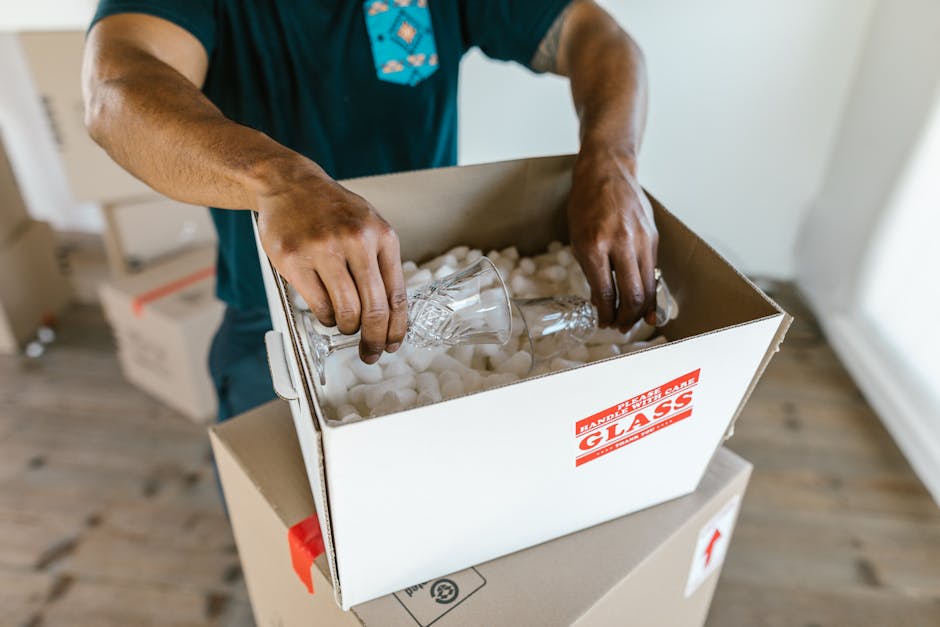
- Wrap each item individually. Even items in a set should be separated so they do not knock against each other.
- Fill empty spaces. Use paper or soft wrap to prevent movement inside the box. If something can rattle, it probably will.
- Seal and label clearly. Mark boxes as fragile and, if helpful, note which room they belong in.
- Keep heavier items low. Fragile boxes should sit above stable, non-breakable items whenever possible.
- Load with care. Do not stack heavy furniture on top of delicate boxes. That one sounds obvious, but it still happens.
- Unpack methodically. Open fragile boxes first only if you need to check for movement or damage; otherwise, place them in a safe area and unpack when you are ready.
A good extra step is to photograph high-value items before the move. Not for drama, just for clarity. If anything arrives damaged, you have a simple record of condition and packaging. Handy. Very handy.
For a fuller packing rhythm, the A to Z of packing for a house move offers useful context, especially if you are trying to organise the whole property rather than a single room.
Expert Tips for Better Results
Small decisions make a big difference with fragile goods. Here are the ones that tend to matter most.
Use the right box size
Oversized boxes let items shift. Tiny boxes can create pressure points. The sweet spot is a box that fits the item with just enough room for protective material all around. Not too snug, not too roomy.
Double-box especially delicate items
For glassware, ornaments, or anything especially fragile, place the wrapped item in a smaller inner box and then cushion that inside a larger outer box. It sounds a bit fussy, but the difference in protection is real.
Keep labels practical
Write fragile, this way up, and the destination room. That is enough. If every side of every box is covered in different labels, people stop reading them. Simple works better.
Do not mix weights carelessly
One heavy item can crush a light one in seconds. Even if the box seems sturdy, the contents may not be. Separate by weight and shape. The same principle applies in the van.
Prepare a small "open first" kit
Put a few essentials aside: tape, scissors, cloth, charger, and maybe one spare box. After a move, these tiny things save a lot of rummaging.
If you are moving something especially awkward like a piano or large instrument, specialist support is usually the safer call. A useful related read is entrusting your piano to professionals, and for actual specialist support there is piano removals in Eastcote.
One more thing: if the weather is damp, be careful with cardboard and paper wrapping near external doorways. British weather being what it is, a dry plan can become a soggy one in about three minutes.
Common Mistakes to Avoid
Fragile-item removals often go wrong for very ordinary reasons. Nothing dramatic. Just small avoidable errors.
- Using weak or damaged boxes: A box that has already been squashed or taped too many times is not your friend.
- Overpacking: If you have to force the flaps shut, stop and repack.
- Leaving gaps: Empty space allows movement, which leads to knock-on damage.
- Mixing unrelated items: Glassware and books do not naturally belong together, no matter how neat the box looks.
- Rushing the lift: Speed is rarely the answer with fragile items.
- Forgetting access routes: Hallways, stairs, door handles, and parked cars all matter.
- Ignoring insurance details: If items are high-value, understand what protection exists before moving day.
Another mistake is assuming that a short local move means low risk. It does not. A ten-minute journey with poor packing can still end badly. In some ways, it is the bouncing and stopping that causes the trouble, not the distance itself.
Tools, Resources and Recommendations
You do not need fancy gear, but you do need the basics done well. The useful kit usually includes:
- double-walled cardboard boxes;
- bubble wrap or paper cushioning;
- packing tape and a tape gun;
- marker pens for clear labels;
- corner protectors for mirrors and frames;
- blankets or furniture pads for larger delicate items;
- zip bags for screws, cables, and small fittings;
- microfibre cloths for dust-sensitive surfaces.
If you need help deciding how much packing support to use, the right option often depends on time, confidence, and the number of fragile items you own. A dedicated service for removal services in Eastcote can be helpful if you want practical support without overbuying supplies.
For storage between moves, or if you are waiting for completion day, it is worth looking into storage in Eastcote. Fragile items are often safer in a controlled, organised storage setup than in a crowded spare room with boxes balanced everywhere. Been there. It gets messy fast.
If you are trying to avoid waste as well as damage, the company's recycling and sustainability information can help you think more carefully about packaging reuse and disposal after the move.
Law, Compliance, Standards, or Best Practice
For a local move in the UK, there is no single special rule for fragile items themselves, but there are sensible best practices around handling, transport safety, and clear communication. If a removals provider is involved, you should expect them to work in a way that reduces avoidable damage and treats belongings with reasonable care.
Best practice usually means:
- clear identification of fragile and high-value items;
- appropriate lifting technique and team handling for awkward loads;
- secure stacking in the vehicle;
- careful route planning for access and parking;
- transparent service terms so you understand responsibilities;
- basic insurance awareness for loss or damage.
It is also sensible to review the service terms and safety information before booking. That is not being overly cautious; it is just sensible housekeeping. Relevant pages include insurance and safety information, the health and safety policy, and the terms and conditions. If you want to know how personal data is handled during enquiries, the privacy policy is the right place to look.
For booking and pricing transparency, pricing and quotes is useful to review before you decide anything.
Options, Methods, or Comparison Table
There is no single perfect way to move fragile items. The right method depends on value, volume, timing, and how much help you want. Here is a simple comparison that may clarify things.
| Method | Best for | Pros | Watch-outs |
|---|---|---|---|
| Self-packing, self-moving | Small loads, low-value delicate items | Lower upfront cost, full control | Higher chance of packing mistakes, more physical effort |
| Pack yourself, use a man and van | Local moves with moderate fragile items | Good balance of cost and convenience | Quality depends on your packing standards |
| Professional removals support | Valuable, awkward, or high-volume fragile goods | Better handling, less stress, usually faster loading | More planning required, may cost more |
| Storage first, move later | Delays between move-out and move-in | Protects items during a gap in timing | Needs careful labelling and secure packing |
If your move includes both general furniture and delicate pieces, it may help to combine services rather than force everything into one plan. For example, furniture removals in Eastcote can handle the larger items while you keep fragile boxes separately managed. That split approach often feels calmer on the day.
Case Study or Real-World Example
Here is a realistic example from a local-style move. A couple relocating from a first-floor flat near Eastcote House Gardens had a modest amount of furniture, but they also owned a surprising number of fragile items: framed prints, a stack of wine glasses, a ceramic lamp, a couple of table mirrors, and a boxed record collection. Nothing enormous. But plenty that could go wrong if packed badly.
They started two days before the move rather than leaving it for the evening before. That was the first smart choice. Glassware was wrapped individually. The mirrors were protected at the corners and placed upright, not flat. The record boxes were kept dry and labelled clearly. They also separated the items they would need immediately after arrival, so there was no frantic opening of every box in the hallway.
On the day, the loading order mattered: heavier furniture went in first, fragile boxes were placed where they would not be crushed, and the most delicate pieces were handled last. The whole thing felt a bit slower at the start, then surprisingly smooth by the end. No heroics. No broken stemware. Just steady, ordinary care doing its job.
That is the real lesson, to be fair. Fragile-item removals are usually won by patience, not by strength.
Practical Checklist
Use this quick checklist before moving day.
- Sort fragile items into groups: glass, ceramics, frames, electronics, mirrors, ornaments.
- Order or gather strong boxes, tape, bubble wrap, paper, and labels.
- Wrap each item separately.
- Fill empty box space so nothing can move.
- Label each box clearly with room and fragility notes.
- Keep heavy items away from delicate ones.
- Check access routes, parking, and stairs before the van arrives.
- Set aside an essentials box for tools and first-day items.
- Take photos of valuable items before loading.
- Review insurance, terms, and delivery timing in advance.
Expert summary: For fragile items, the safest move is almost always the simplest one: pack tightly, label clearly, load carefully, and never let speed outrun common sense.
If you are still in the planning stage, a quick look at removals in Eastcote can help you compare your options and decide whether you need a small van, a full service, or something in between.
Conclusion
Moving fragile items around Eastcote House Gardens does not need to be stressful, but it does need to be deliberate. The best results usually come from a calm process: the right materials, careful wrapping, sensible loading, and a bit of planning around access and timing.
Think of it this way. Every fragile item has a weak point. Your job is simply to remove as many chances of impact as possible. Do that well, and the move becomes much less dramatic. Which, honestly, is a lovely outcome. Moving day should not feel like a disaster waiting to happen.
If you want a smoother, more secure approach, it is worth combining your preparation with trusted local support and clear booking information. And if you are moving soon, take a breath first. Slow is not a failure here. Slow is careful.
Get a free quote today and see how much you can save.
If you are ready to talk through your move, you can always contact the Eastcote team for straightforward next steps.
Frequently Asked Questions
What is the best way to pack fragile items for a move in Eastcote House Gardens?
The best approach is to wrap items individually, use sturdy boxes, fill empty spaces so nothing shifts, and label boxes clearly. For especially delicate items, double-boxing can add an extra layer of protection.
Should I move fragile items myself or use a removals service?
If you only have a few low-value items, self-moving may be fine. If the items are valuable, awkward, or numerous, a removals service is usually safer and less stressful. The right answer really depends on your confidence and the kind of items involved.
Can I use any cardboard box for glassware and ornaments?
Not really. A strong, double-walled box is a better choice for fragile goods. Used supermarket boxes can work for light items, but they are less reliable for delicate possessions that need stable support.
How should mirrors and framed artwork be moved?
Mirrors and frames should be protected at the corners, wrapped well, and kept upright during transport whenever possible. Laying them flat can increase the chance of pressure damage, especially if other items are stacked nearby.
What items are most at risk during a local move?
Glassware, ceramics, lamps, mirrors, framed pictures, electronics, and anything with loose or protruding parts are often the most vulnerable. Small items can be just as fragile as large ones, sometimes more so.
Do fragile boxes need special labels?
Yes, clear labels help everyone handle the boxes properly. Simple labels like "fragile," "this way up," and the destination room are usually enough. Over-labelling can become confusing, so keep it readable.
Is it worth paying for packing materials?
Usually, yes, if the items are valuable or hard to replace. Good packing materials often cost less than replacing broken belongings, and they can make the moving day easier as well.
What should I do if my move is delayed and I need storage?
Use a secure storage option and keep fragile items boxed properly until they are needed again. If there is a gap between moving out and moving in, storage can be a very practical bridge. The key is to label everything clearly before it goes away.
How far in advance should I start packing fragile items?
Ideally, start a few days in advance, or sooner if you own a lot of delicate belongings. Packing in a rush usually leads to poor wrapping and rushed decisions, and that is when things start to go wrong.
Can fragile items be moved on the same day as furniture?
Yes, they can, but they should be separated carefully from heavier furniture and loaded with awareness of where they sit in the van. If you are also moving large items, a structured plan matters even more.
What if I only need help with one awkward item, like a piano?
Then specialist support is often the smartest route. Certain items are simply not worth guessing on, especially if they are heavy, valuable, or difficult to manoeuvre through tight access. For those jobs, dedicated piano support makes sense.
How do I get a quote for fragile-item removals in Eastcote?
The simplest step is to request a quote and explain what you are moving, how many fragile items you have, and whether you need packing, storage, or timed delivery. A clear description usually leads to a more useful quote.